Imagine a world where blockchain isn’t just a closed system, but one that interacts seamlessly with real-world data, stock prices, weather updates, sports scores, or even election results. That’s the magic of blockchain oracles! These hidden powerhouses act as bridges, pulling trusted external data into smart contracts, unlocking endless possibilities in DeFi, NFTs, insurance, and beyond.
But how do oracles work? Can they be trusted? And why are they essential for blockchain’s evolution? In this blog, we’ll dive deep into the fascinating world of blockchain oracles, exploring their types, use cases, and the risks they pose. We’ll also uncover how decentralized oracles solve trust issues, making blockchain smarter, more reliable, and ready for mainstream adoption.
By the end, you’ll understand why oracles are not just tools but the key to blockchain’s true potential. Ready to unlock this hidden magic?
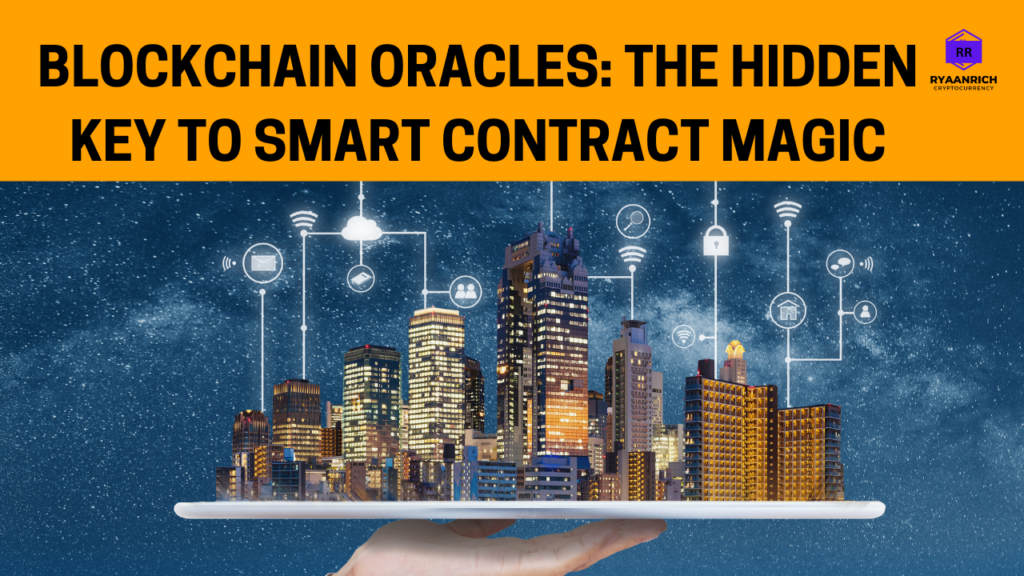
Let’s dive in deeply and explain blockchain oracles using these 7-section guide;
- What Are Blockchain Oracles?
- Why Do Smart Contracts Need Oracles?
- Types of Blockchain Oracles
- Software Oracles
- Hardware Oracles
- Inbound vs. Outbound Oracles
- Centralized vs. Decentralized Oracles
- How Blockchain Oracles Work
- Top Use Cases of Blockchain Oracles
- Challenges and Risks of Oracles
- The Future of Blockchain Oracles
1. What Are Blockchain Oracles?
Blockchains are like walled gardens secure, transparent, and immutable, but completely disconnected from the outside world. Smart contracts, though revolutionary, can’t fetch real-world data on their own. This is where blockchain oracles come in!
Think of an oracle as a messenger that fetches external data and feeds it to a smart contract. Whether it’s stock prices, weather conditions, election results, or sports scores, oracles allow blockchain applications to interact with reality. Without them, DeFi protocols couldn’t track asset prices, insurance smart contracts couldn’t process claims based on real-world events, and supply chain solutions couldn’t verify shipments.
But here’s the catch: how do we trust the oracle? If an oracle feeds false or manipulated data, smart contracts could execute incorrect actions, leading to financial losses or security breaches. This is known as the oracle problem one of the biggest challenges in blockchain today.
The good news? Innovations like decentralized oracles (where multiple sources verify data before it reaches the blockchain) are solving this issue. Projects like Chainlink, Band Protocol, and API3 are leading the way, ensuring data integrity and reliability.
In essence, oracles unlock the full potential of blockchain, making smart contracts more powerful, dynamic, and ready for mainstream adoption. Now, let’s dive into why these oracles are essential for smart contracts to function effectively.

2.Why Do Smart Contracts Need Oracles?
Imagine a smart contract for a weather-based insurance policy. You’re a farmer, and your policy states that if there’s a drought for 60 days, you get an automatic payout. Sounds great, right? But wait how does the smart contract know if there was a drought?
This is the exact reason why smart contracts need oracles. Blockchains are isolated by design, and smart contracts can’t fetch external data without help. Whether it’s crypto price feeds, IoT sensor data, real-time sports scores, or election results, oracles act as the bridge, making smart contracts truly functional.
Without oracles, DeFi wouldn’t exist lending platforms like Aave and Compound rely on price feeds to prevent liquidation errors. Gaming and NFTs would lack real-world randomness for provably fair results. Logistics and supply chains couldn’t verify real-time tracking data. The list goes on!
But it’s not just about data access it’s about trustworthy data. If a smart contract executes based on incorrect information, millions could be lost in seconds. This is why decentralized oracles are game-changers, pulling data from multiple sources to ensure accuracy and prevent manipulation.
The takeaway? Smart contracts without oracles are like phones without the internet useful, but severely limited. Oracles make blockchain applications more intelligent, efficient, and connected to the real world.
3.Types of Blockchain Oracles
Not all oracles are the same! Depending on where the data comes from, how it’s processed, and how trustworthy it is, there are different types of blockchain oracles. Let’s break them down:
1. Software Oracles
These fetch data from online sources APIs, websites, and databases. For example, a DeFi protocol might use a software oracle to pull real-time Bitcoin prices from multiple exchanges.
2. Hardware Oracles
These interact with physical devices like IoT sensors, RFID scanners, or biometric readers. For example, a supply chain blockchain might rely on a temperature sensor oracle to verify if perishable goods were stored at the correct temperature.
3. Inbound vs. Outbound Oracles
- Inbound Oracles bring external data into the blockchain (e.g., weather data for insurance smart contracts).
- Outbound Oracles send blockchain data out to external systems (e.g., triggering a bank payment when a smart contract executes).
4. Centralized vs. Decentralized Oracles
- Centralized oracles rely on a single data source, which makes them vulnerable to manipulation or failure.
- Decentralized oracles pull data from multiple sources and use consensus mechanisms to verify accuracy reducing the risk of a single point of failure.
The right type of oracle depends on the use case, but one thing is clear: without them, blockchain’s real-world applications would be extremely limited!
4.How Blockchain Oracles Work
Now that we know what oracles are and why they’re crucial, let’s break down how they actually work.
At their core, oracles follow four simple steps:
- Request – A smart contract makes a request for real-world data.
- Fetch – The oracle retrieves this data from one or multiple sources.
- Verify – If using a decentralized oracle, multiple data points are compared for accuracy.
- Deliver – The verified data is sent to the blockchain, allowing the smart contract to execute.
For example, let’s say you’re using a sports betting dApp where smart contracts automatically pay winners. Here’s what happens:
- The smart contract requests the final score.
- The oracle fetches data from multiple sports APIs (ESPN, FIFA, etc.).
- A consensus mechanism checks for consistency across sources.
- The verified result is delivered to the blockchain, triggering payouts.
However, trust is everything. If a malicious oracle provides fake data, the smart contract will execute incorrectly. That’s why top-tier decentralized oracles like Chainlink use multiple data providers, aggregators, and consensus mechanisms to ensure accuracy.
Oracles are the unsung heroes of blockchain, silently ensuring that smart contracts interact with reality seamlessly and securely. But as we’ll explore next, their use cases go far beyond just sports betting or DeFi!

5.Top Use Cases of Blockchain Oracles
Blockchain oracles aren’t just a fancy add-on they’re the backbone of many real-world applications. Without them, smart contracts would be stuck in their own bubble, unable to interact with live data. Here are some of the most powerful use cases:
1. Decentralized Finance (DeFi)
Oracles power price feeds for lending platforms like Aave and Compound, ensuring accurate asset valuations. They also enable automated liquidations, stablecoins pegged to real-world currencies, and cross-chain interoperability.
2. Insurance
Smart contracts can verify real-world conditions using oracles. For instance, crop insurance can trigger automatic payouts if a drought is confirmed by weather data. Flight delay insurance can instantly compensate passengers based on real-time airline data.
3. Supply Chain Management
Oracles connect blockchain with IoT sensors, tracking shipments, temperature conditions, and authenticity of goods. This helps prevent fraud and ensures transparent logistics.
4. Gaming and NFTs
Many blockchain games use oracles for random number generation, ensuring fairness in loot boxes, card draws, or PvP battles. NFTs can also evolve based on real-world events, such as a game character gaining powers if a certain sports team wins.
5. Sports and Prediction Markets
Betting platforms and decentralized prediction markets use oracles to fetch real-time sports scores, election results, and financial outcomes.
These are just a few examples oracles are revolutionizing industries by making smart contracts truly “smart.”

6.Challenges and Risks of Oracles
Oracles are powerful, but they aren’t without risks. Since they bring external data into the blockchain, they introduce a critical trust issue how do we ensure the data is accurate and not manipulated?
1. The Oracle Problem
Blockchains are trustless, but oracles are not. If an oracle feeds false data, smart contracts will execute incorrect actions, leading to financial losses or fraud. This is known as the Oracle Problem one of the biggest challenges in blockchain today.
2. Centralization Risks
Some oracles rely on a single data source, creating a single point of failure. If that data source is compromised, the entire system can be manipulated. This is why decentralized oracles, which aggregate multiple data sources, are essential.
3. Data Latency
Some applications, like high-frequency DeFi trading, require real-time data. Oracles introduce a time lag, which can lead to price discrepancies and arbitrage risks.
4. Security Attacks
Oracles can be targeted by hackers through data manipulation, Sybil attacks, or collusion between data providers. Projects must implement robust security measures to mitigate these threats.
Despite these challenges, solutions like decentralized oracles, cryptographic proofs, and reputation systems are helping build more secure and reliable oracles. The future of oracles lies in eliminating trust assumptions while maximizing efficiency.

7.The Future of Blockchain Oracles
Oracles are just getting started. As blockchain adoption grows, oracles will play an even bigger role in bridging smart contracts with the real world. So, what does the future hold?
1. More Decentralization
Projects like Chainlink, API3, and Band Protocol are pushing for fully decentralized oracles, where no single entity can manipulate the data. This will eliminate trust issues and increase security.
2. AI-Driven Oracles
The combination of AI and blockchain will lead to oracles that can analyze massive datasets, detect anomalies, and provide smarter, more accurate insights for smart contracts.
3. Cross-Chain Oracles
As multi-chain ecosystems grow, oracles will evolve to seamlessly connect different blockchains, enabling interoperability between networks like Ethereum, Solana, and Binance Smart Chain.
4. Privacy-Preserving Oracles
New solutions like zero-knowledge proofs will allow oracles to verify data without exposing sensitive information, ensuring greater privacy and compliance with regulations.
The future of blockchain depends on oracles evolving to become faster, more secure, and completely trustless. If they succeed, smart contracts will power a new era of automated, real-world interactions from finance and insurance to healthcare and supply chains.
The possibilities are endless. The question is: are we ready for the oracle revolution?
Conclusion
Blockchain oracles are the missing link between smart contracts and the real world. Without them, smart contracts would be isolated, unable to access external data like prices, weather, sports scores, or IoT sensor readings. Oracles make blockchain smarter, more dynamic, and ready for real-world adoption.
We explored how oracles power DeFi, insurance, gaming, supply chains, and prediction markets, making automation seamless and trustless. However, they also come with risks the oracle problem, centralization concerns, and security threats. Thankfully, decentralized oracles, cryptographic proofs, and AI-driven solutions are shaping the future, ensuring reliability and security.
As blockchain technology evolves, oracles will become even faster, smarter, and more decentralized, paving the way for a truly interconnected world. Will oracles be the key that unlocks blockchain’s full potential, or will they remain its biggest challenge? The answer lies in innovation and the future is being written now.